The $4,900 Question: Unitree R1 Puts a Multimodal Humanoid on the Shop Floor
Unitree's July 25 launch of the R1 humanoid—starting at $4,900 with onboard speech-and-vision models and open joint interfaces—signals a shift from demo-stage bipeds toward developer-ready embodied agents.
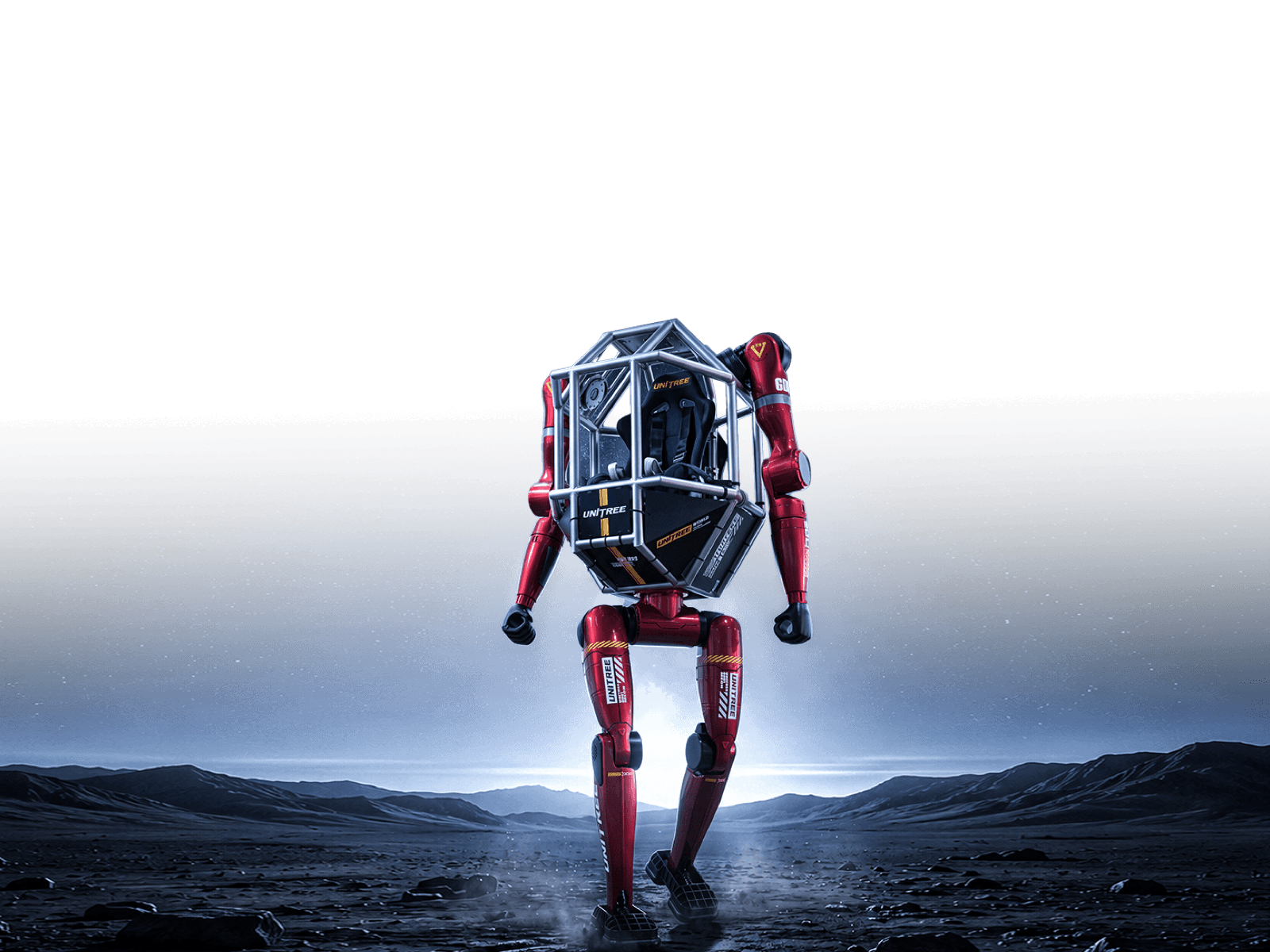
When the spec sheet reads like a product page
Humanoid robotics has spent years oscillating between viral demo reels and factory pilots that never ship. On July 25, Hangzhou-based Unitree Robotics crossed into a different category entirely: it listed a bipedal humanoid for purchase on its official store, with a public price ladder and a software story built around multimodal AI—not just torque curves.
According to Unitree's about page, the company released the R1 as an "intelligent companion" humanoid on that date, positioning it as an ultra-lightweight platform that integrates voice and image large multimodal models. That framing matters. The R1 is not being sold primarily as a stunt platform for backflips; it is being marketed as an embodied agent developers can buy, unbox, and extend.
For a field accustomed to six-figure research machines, the numbers on Unitree's product page land with force. The R1 AIR starts at $4,900; the standard R1 is $5,900; the EDU tier is contact-sales only. Tax and shipping are excluded, and the shop notes shipping costs between $300 and $1,200 depending on destination—details buyers should treat as real, not decorative.

Hardware that fits in a lab, not a warehouse aisle
Unitree's published R1 parameters describe a compact machine: roughly 123 cm tall, about 27–29 kg depending on variant, with 20 to 26 degrees of freedom on consumer SKUs and up to 26–40 on the EDU configuration. The head carries two DOF for environmental perception; legs offer six DOF each; arms range from four to five DOF per side depending on model.
The mechanical story emphasizes maintainability—hollow internal routing, local air cooling, quick-release smart batteries, and continuous OTA software updates. Battery life is listed at about one hour, which is honest for a category that still treats endurance as a research constraint rather than a solved problem.
What separates the R1 from earlier Unitree humanoids like the H1 and G1 is the combination of access pricing and explicit AI integration. The product page states the robot ships with a large multimodal model processing speech and images, plus fully open control interfaces for joints and sensors. Unitree also advertises compatibility with mainstream simulation platforms so algorithms trained in silico can, in principle, migrate to hardware without a bespoke porting project.
That open-interface posture is the real industrial signal. Factories may eventually want humanoids on lines, but today's buyers—universities, startups, hobbyist labs—need robots that expose APIs before they expose ROI. Unitree is betting the R1's EDU tier, optional dexterous hands, and optional high-power compute modules (including NVIDIA Jetson-class options up to 100 TOPS on the spec sheet) will anchor a developer ecosystem the way quadrupeds like the Go2 already did for the company.
Three SKUs, one strategic ladder
Unitree segments the lineup cleanly:
- R1 AIR ($4,900): 20 DOF, monocular camera, no waist or head articulation on the base spec—essentially the entry ramp.
- R1 ($5,900): 26 DOF with waist and head motion, binocular vision, manual controller included.
- R1 EDU (contact sales): Secondary development support, optional dexterous hands, extended warranty (12 months vs. six to eight on lower tiers).
The shop currently lists some R1 AIR colorways as backordered, which suggests demand is real even if fulfillment is still catching up. Unitree also sells a dual-arm derivative, the R1-D, from $4,290—evidence that the company is modularizing the platform rather than treating humanoids as one-off sculptures.

What "intelligent companion" actually commits to
Unitree's marketing language—"intelligent pioneer," "movement first, tasks as well"—tracks a broader industry pivot. The embodied-AI stack is no longer just motor controllers plus teleoperation; it is speech, vision, and policy code running on the same power budget as locomotion.
The R1's onboard stack includes an eight-core processor, four-microphone array, Wi-Fi 6, Bluetooth 5.2, and continuous OTA updates. Unitree explicitly warns that the global humanoid industry remains in early exploration and that some sample functions on the product page are still under development—language that reads as liability-conscious but also accurate.
Community reaction on robotics forums has focused on the price point relative to Boston Dynamics Atlas or Tesla Optimus—comparisons that miss the point. Those platforms target industrial scale at undisclosed or much higher price bands. Unitree is competing for the same mindshare NVIDIA's Isaac GR00T stack chases: many cheap robots generating data, not one perfect robot performing a choreographed routine.
Researchers publishing on arXiv this year—from agentic VLA frameworks to video-diffusion world models—keep returning to the same bottleneck: heterogeneous hardware with minimal per-robot tuning. A sub-$6,000 biped with open joints and simulation hooks is exactly the kind of volume play those papers assume will exist, even if the papers do not name Unitree specifically.
Risks buyers should price in
None of this eliminates the hard problems. Unitree's own disclaimers note complex structures, high power output, and the need to maintain safety distance. The shop states the standard R1 and R1 AIR do not support secondary development; customization requires the EDU edition—a distinction casual headlines often blur.
Import duties, customs phone-number requirements, and the absence of dexterous hands on lower tiers mean the $4,900 headline price is a floor, not the all-in cost of a manipulation research program. And one hour of battery life still bounds continuous autonomy experiments.
Still, for Robotics category watchers, the launch is verifiable news, not vapor. Primary sources list SKUs, weights, DOF tables, and dollar amounts. That alone moves the Overton window for who gets to participate in humanoid agent research.

Why today matters
Unitree built its brand on agile quadrupeds that looked like consumer products long before they felt safe in living rooms. The R1 extends that playbook upward: sticker-customizable shells, influencer-friendly reveal videos, and a price that undercuts many used cars.
Whether the R1 becomes a serious research instrument or a sophisticated toy will depend on software maturity, EDU channel support, and the honesty of third-party benchmarks—not launch-day hype. But the event itself is documented: on July 25, Unitree added a multimodal humanoid to its official catalog with a starting price of $4,900.
In a year when industrial humanoids from Shanghai Electric and LimX Dynamics also debuted at major conferences, Unitree's move is the one that most directly tests whether accessible hardware plus open interfaces can accelerate embodied agents faster than closed factory pilots. The receipt is on the shop page. The experiments are up to the rest of us.
### Sources
- Unitree Robotics — About Unitree (July 25 R1 release note)
- Unitree Robotics — Unitree R1 product specifications
- Unitree Robotics — Unitree R1 shop listing and SKU pricing
- Community signal — RobotShop community post on R1 reveal (secondary; corroborates launch timing, not primary specs)