The Sequencing Tier: Figure 03 Moves BMW Spartanburg From Body Shop to Logistics
After Figure 02's body-shop pilot, BMW deploys Figure 03 at Spartanburg for logistics sequencing with Helix 02 loco-manipulation.
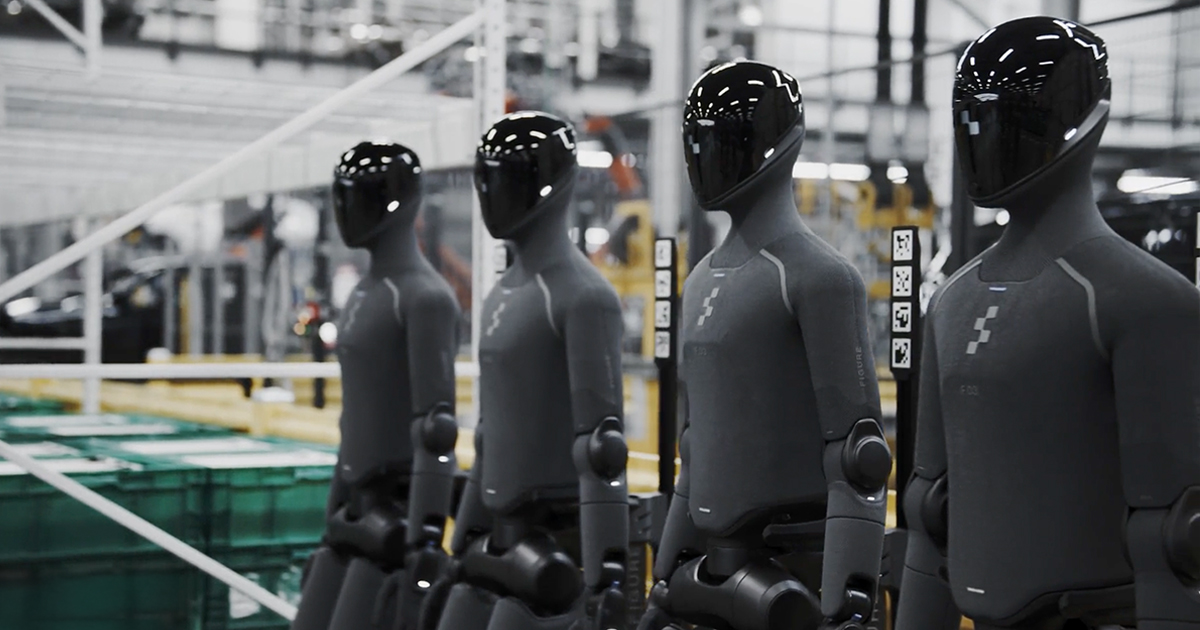

BMW Group Plant Spartanburg has been humanoid robotics' proving ground in American automotive manufacturing. After Figure 02 spent 11 months in the body shop inserting sheet-metal parts for more than 30,000 X3 units, BMW is moving the program into logistics with Figure 03.
From body shop to sequencing
Figure's June 30, 2026 announcement describes logistics sequencing: components arrive unsorted in large containers; Figure 03 sorts them into sequencing trolleys for just-in-sequence delivery to assembly workers.
"Plant Spartanburg is the birthplace of humanoid robotics in BMW Manufacturing's operational day-to-day activities," said Ulrich Wieland, vice president of production control and logistics at BMW Manufacturing.
Why sequencing is harder
Sequencing is an intractable sorting environment — parts shift, rotate, and partially occlude. Figure 03 must perceive variation and correct on the fly rather than replay fixed trajectories.
Helix 02 and loco-manipulation
Figure 03 performs loco-manipulation powered by Helix 02, adjusting foot placement and body position while dual-hand grasping. Deployments are in Hall 52; tugger trains carry trolleys to assembly stations.
Hardware and scale
Figure 03 adds tactile-sensor hands, palm cameras, wireless charging, and speech-to-speech audio. BMW's timeline includes Leipzig laboratory pilots and virtual-factory simulation before full Spartanburg sequencing.
If Figure 03 maintains sort accuracy across SKU mixes, Spartanburg becomes a reference for humanoids in logistics — not just weld cells.