Rungs, Not Routes: Figure 03's Ladder Climb Tests Vision-Driven Whole-Body Control
Figure's Brett Adcock posted video of Figure 03 climbing a ladder autonomously, alongside Helix S0 upgrades that fuse stereo vision with whole-body control — unverified, but a meaningful mobility stress test.
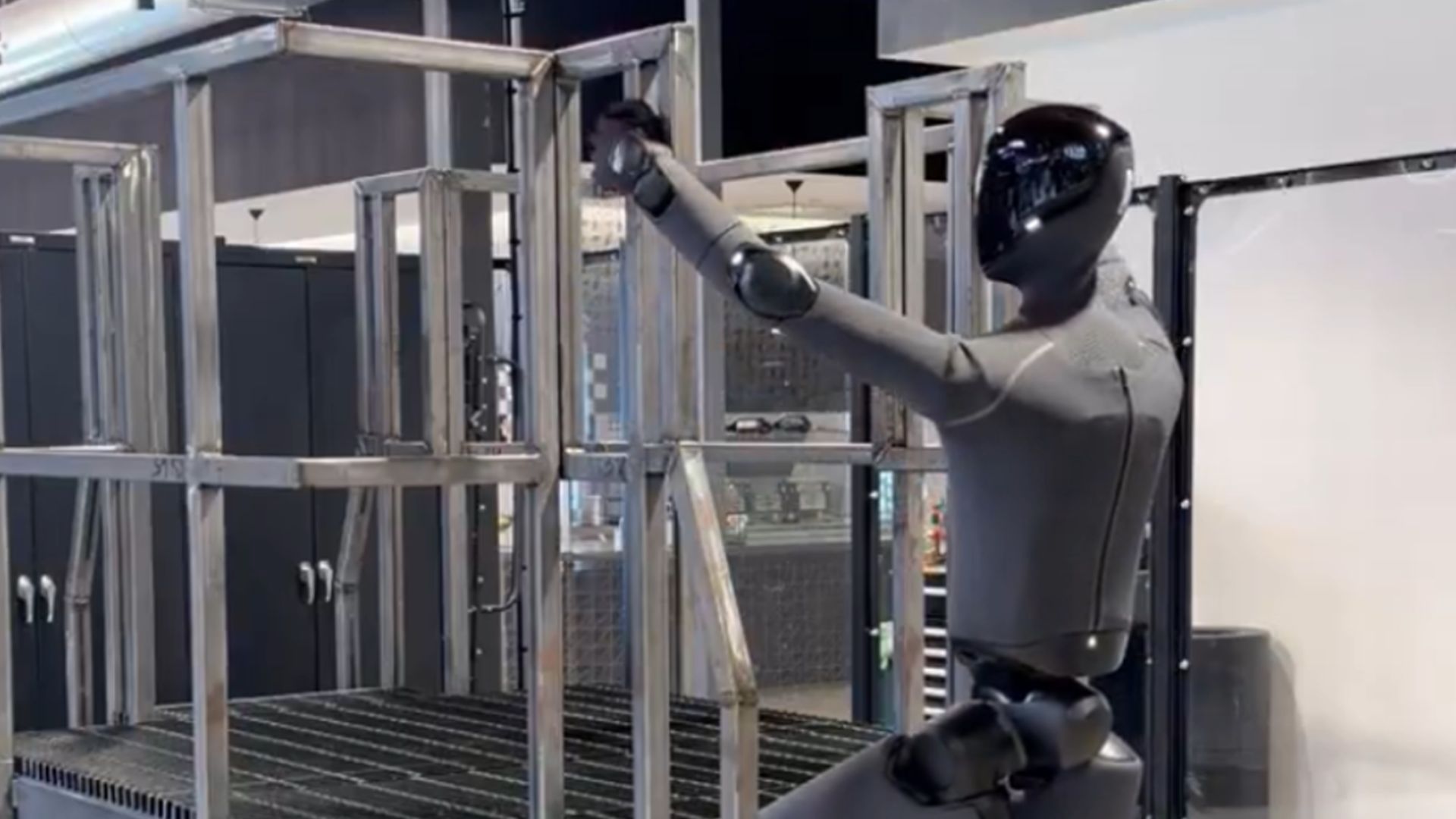
Climbing a ladder is one of those tasks that looks simple until you watch a humanoid try it. It demands coordinated arm-and-leg motion, continuous balance correction, and accurate perception of rung spacing — all while the center of mass shifts with every step.
On August 1, 2026, Figure founder Brett Adcock posted a video on X showing the company's Figure 03 humanoid ascending a ladder fully autonomously, without visible human assistance or remote control. Interesting Engineering reported on the demonstration August 3.
Figure has not disclosed technical details about the underlying control stack, and the demo has not been independently verified. This desk treats the video as a claimed milestone, not a certified capability.
Why ladders matter
Warehouses, construction sites, and homes all contain vertical access points that wheeled platforms cannot navigate. For humanoids targeting general-purpose deployment, ladder climbing sits alongside stair traversal as a proxy for whole-body locomotion under sparse footholds.
Adcock followed the video with a separate post arguing that "wheeled robots are an utter dead end," reiterating his view that legged humanoids are better suited for environments designed for humans.
That opinion is contested across the industry — many logistics operators prefer wheeled AMRs for predictable floor surfaces — but the ladder demo, if reproducible, addresses a capability gap wheeled systems cannot close.

Helix S0: vision meets proprioception
The ladder footage arrives alongside a broader upgrade to Figure's Helix System 0 (S0) AI model.
Previously, S0 relied primarily on proprioception — joint positions, body movements, and balance signals — which limited navigation on complex terrain. The updated model incorporates real-time visual data from onboard stereo cameras, processing RGB images into a three-dimensional representation of the surrounding environment.
Figure said the system was trained end-to-end using reinforcement learning in simulation across randomized terrains, with behaviors transferring to real-world robots without additional calibration — addressing the long-standing sim-to-real gap.
The company claims the architecture enables human-like stability on stairs and uneven surfaces under changing lighting, and believes it will support a broader range of environment-aware behaviors.
Production context
Figure has also reported increasing Figure 03 production from one unit per day to one per hour, delivering over 350 robots while boosting manufacturing efficiency — figures the company shared in recent announcements covered by Interesting Engineering.
That production ramp matters because ladder demos without deployable unit counts are laboratory curiosities. Figure is explicitly positioning Figure 03 for everyday environments, not just staged benchmarks.

What to watch
Three verification steps would strengthen confidence in this milestone:
- Published metrics: success rate across ladder types, heights, and rung materials — not a single curated clip.
- Independent observation: third-party testing or customer-site deployment footage.
- Failure modes: how the system behaves when a rung is missed or perception degrades.
Researchers on X described the demo as "good progress" in humanoid mobility. That is fair — and appropriately qualified.
Humanoid robotics in 2026 is a season of impressive videos and uneven reliability. Ladder climbing is hard. Proving it works outside a demo reel is harder still.

### Sources
- Interesting Engineering — Figure 03 humanoid tackles autonomous ladder climb in the latest demo (August 3, 2026)
- X — Brett Adcock ladder demo post (August 1, 2026)