One Shot, Not a Thousand Iterations: Quantinuum and Pfizer Train AI to Generate Drug Quantum Circuits
Quantinuum, NVIDIA, and Pfizer describe ADAPT-GQE — a generative AI framework that builds molecular quantum circuits in one step and ran imipramine circuits on Helios hardware.
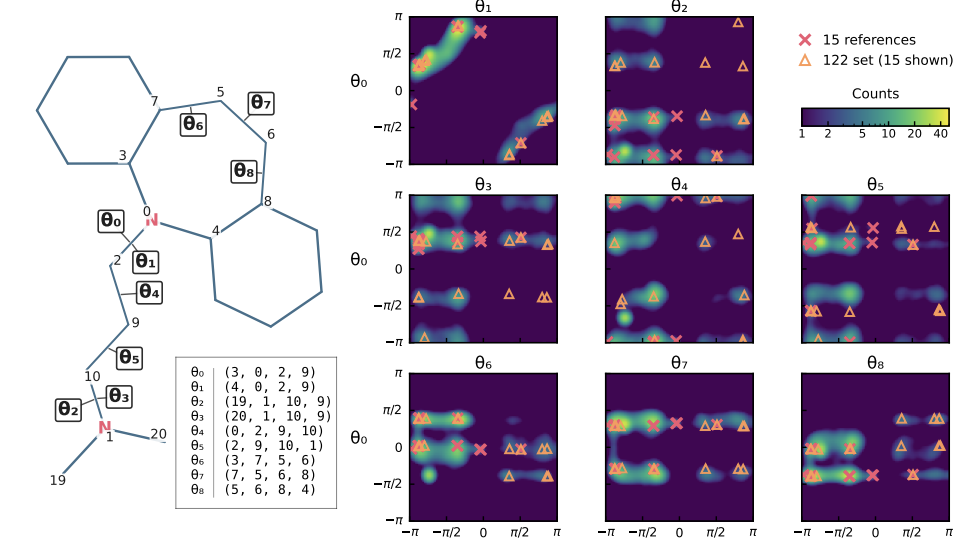
Designing quantum circuits for drug-sized molecules has traditionally meant iterative optimization — algorithms like ADAPT-VQE assemble circuits step by step, which can take hours or days for pharmaceutical targets.
Researchers from Quantinuum, NVIDIA, and Pfizer posted a preprint in July 2026 describing a generative alternative: ADAPT-GQE, a framework that uses transformer language models plus reinforcement learning to synthesize molecular ground-state preparation circuits in a single inference step.
The team reported circuit-generation time reductions of three to four orders of magnitude relative to ADAPT-VQE while matching or exceeding its accuracy on benchmark tests — and executed AI-generated circuits on Quantinuum's Helios trapped-ion processor using imipramine, a tricyclic antidepressant commonly used as a pharmaceutical benchmark molecule.

From iterative optimization to one-shot generation
Variational quantum eigensolvers dominate near-term quantum chemistry because they adapt circuits to molecule structure. ADAPT-VQE grows circuits by repeatedly selecting operators from a pool — accurate, but computationally expensive at scale.
ADAPT-GQE reframes the problem as sequence generation. A transformer learns reusable structure in quantum circuits; reinforcement learning refines outputs against accuracy targets. Instead of hundreds of optimization loops, the model emits a complete circuit directly.
Quantinuum, NVIDIA, and Pfizer authors — spanning London, Cambridge, Santa Clara, Groton, and Thessaloniki — position the work as a pathway toward automated circuit synthesis for large-scale quantum computational chemistry.
Hardware execution on Helios
Benchmark accuracy alone does not settle the question for hardware teams. The preprint includes execution of representative AI-generated circuits on Quantinuum Helios-1, a trapped-ion system the company markets for high-fidelity logical operations.
Running imipramine circuits on real hardware marks a milestone for AI-generated quantum chemistry workloads: the output is not only a simulation artifact but a gate sequence operators can load onto a production-class machine.
The Quantum Insider, reporting on the arXiv posting July 30, noted the work remains a preprint — not yet peer-reviewed — but represents one of the clearest industry-lab-pharma collaborations on generative quantum circuit design to date.

Why Pfizer and NVIDIA joined
Drug discovery teams care about molecules too large for classical simulation alone but too complex for hand-tuned quantum circuits. Imipramine sits in that pedagogical sweet spot: pharmaceutically meaningful, structurally challenging, and small enough for near-term hardware experiments.
NVIDIA's role reflects the broader pattern of GPU-accelerated training for scientific foundation models — the same infrastructure stack powering protein structure predictors now applied to gate sequences.
Pfizer's participation signals that major pharma is treating quantum circuit automation as an engineering problem worth co-developing, not a decade-out curiosity.
Open questions
The authors report large speedups on generation time; end-to-end wall-clock advantage on full drug pipelines still depends on error rates, qubit counts, and classical verification costs the preprint does not claim to eliminate.
Peer review, independent replication on other hardware lines, and extension beyond imipramine-class molecules remain outstanding.
Still, ADAPT-GQE offers a concrete template: generative AI trained on circuit structure, refined with RL, validated on trapped ions — a stack that did not exist in production form three years ago.

Sources
- The Quantum Insider — Researchers: AI Can Learn to Build Quantum Circuits For Drug Molecules (July 30, 2026)
- Quantum Zeitgeist — Quantinuum, NVIDIA, And Pfizer Transformer Models Generate Quantum Circuits (July 2026)
- Quantinuum — Helios quantum processor (accessed July 31, 2026)