One Forward Pass: Quantinuum, NVIDIA, and Pfizer Train AI to Write Quantum Chemistry Circuits
Quantinuum, NVIDIA, and Pfizer report transformer-generated quantum circuits for imipramine ground states 1,000× faster than ADAPT-VQE, executed on Helios — as IBM publishes parallel trusted-advantage demonstrations.
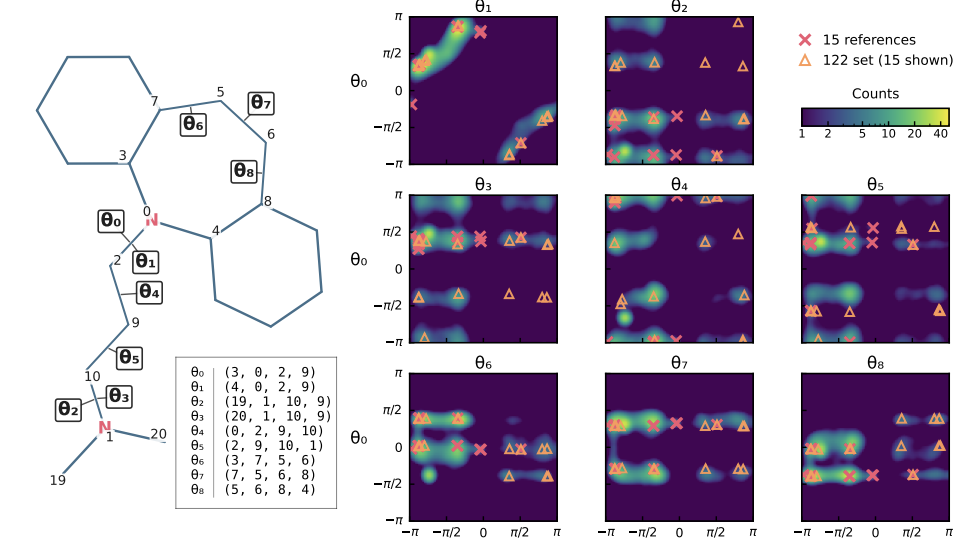
Quantum chemistry has a preparation problem: before a quantum computer can estimate a molecule's energy, it must construct a circuit that approximates the molecule's ground state. Iterative algorithms like ADAPT-VQE can produce shallow circuits — but repeated optimization scales poorly as molecules grow.
On July 30, researchers from Quantinuum, NVIDIA, and Pfizer posted a preprint showing a generative AI framework can collapse that bottleneck by three to four orders of magnitude, then executed AI-generated circuits on Quantinuum's Helios trapped-ion processor using the pharmaceutical molecule imipramine.

ADAPT-GQE: circuits as language
The framework, ADAPT-GQE, treats quantum circuit generation as a sequence modeling problem. Transformer models learn to emit complete ground-state preparation circuits in a single inference step rather than through iterative ADAPT-VQE optimization.
According to The Quantum Insider and the arXiv preprint, the team generated 13,000–15,700 training circuits across imipramine conformers, matched or exceeded ADAPT-VQE accuracy, applied reinforcement learning to surpass training-data quality, and executed representative circuits on Quantinuum Helios-1.
Parallel track: trusted quantum advantage
The ADAPT-GQE result arrives the same week IBM and partners published a separate narrative: validated advantage when classical verification fails.
In a July 30 IBM Quantum blog post, researchers from UChicago, Qedma, and Algorithmi reported three demonstrations where quantum computations could be trusted even when leading classical methods disagree — using doped Clifford sampling, Floquet dynamics with cross-platform validation, and operator Loschmidt echo estimation.

Jay Gambetta told journalists the demonstrations show quantum computers can solve problems beyond classical reach with evidence the results are reliable.
Limits and what comes next
The ADAPT-GQE authors note models were trained per qubit count and validation focused on a single pharmaceutical molecule.
Still, the pairing of results is instructive: IBM emphasized trusted beyond-classical computation, while Quantinuum/NVIDIA/Pfizer showed AI shrinking the design cost of chemistry circuits that might run on commercial hardware.

### Sources
- arXiv — Learning to Prepare Molecular Ground States with Transformer Models (July 2026)
- The Quantum Insider — Researchers: AI Can Learn to Build Quantum Circuits For Drug Molecules (July 30, 2026)
- IBM Quantum — Researchers demonstrate quantum advantage through trusted quantum computation (July 30, 2026)
- The Next Platform — IBM: Three Demonstrations Prove Quantum Advantage Has Been Reached (July 31, 2026)