The Design Engine: IsoDDE Pushes Isomorphic Labs Beyond AlphaFold 3's Structure Ceiling
Isomorphic Labs' IsoDDE claims to double AlphaFold 3 accuracy on hard protein-ligand cases and predict binding affinity rivaling FEP+.
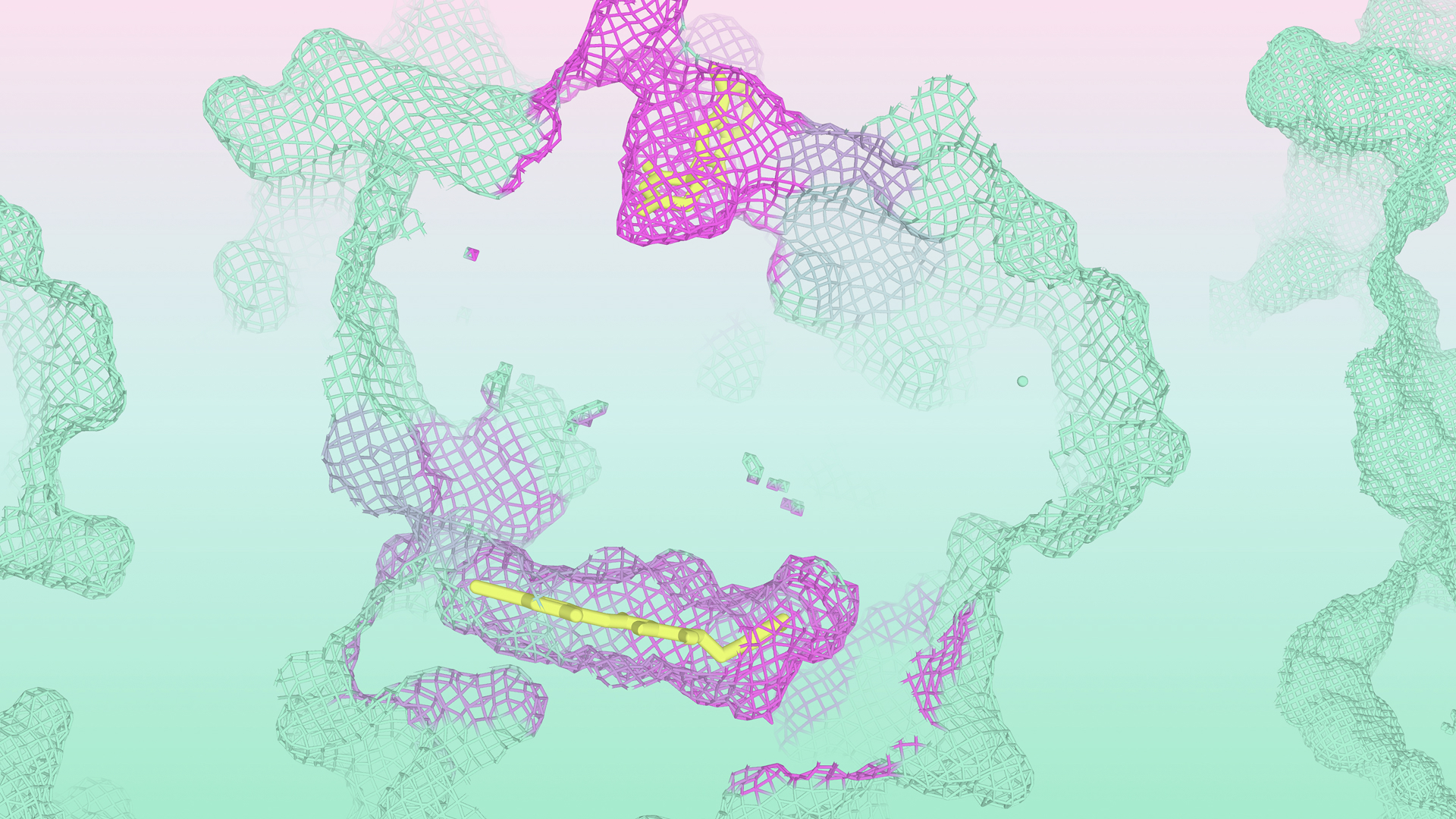
AlphaFold 3 changed what computational biologists expect from structure prediction. It did not, by itself, close the gap between knowing a protein's shape and designing a drug that binds it reliably in novel chemical space.
On February 10, 2026, Isomorphic Labs introduced IsoDDE — a unified, proprietary drug-design engine the company says moves beyond AlphaFold 3 in generalization, binding affinity estimation, and blind pocket detection.
Beyond structure to design
IsoDDE targets poor generalization to unexplored chemical space, weak binding affinity estimation without expensive physics simulations, and inability to find novel binding pockets from sequence alone.
Benchmark claims
On Runs N' Poses, Isomorphic reports IsoDDE more than doubles AlphaFold 3 accuracy on the hardest out-of-distribution protein-ligand cases. In biologics, it cites 2.3× improvement over AlphaFold 3 on antibody-antigen interface prediction.
Affinity without the FEP invoice
IsoDDE's affinity predictions are said to match or exceed gold-standard physics-based methods such as FEP+ — without pre-existing crystal structures. Endpoints News called it a "step-change improvement" over AlphaFold 3.
Unlike AlphaFold 2's open release, IsoDDE remains fully proprietary. The February release is a capabilities preview, not a portfolio of approved drugs.
What skeptics will watch
Benchmark gains on curated test sets have disappointed before in medicinal chemistry. July 2026 finds IsoDDE stronger on paper than in FDA filings — but for computational drug design, that is often where the next decade begins.