
What changed
On 16 September 2026 Aigen, based in Redmond, Washington, announced Element Gen 2 X4. It is the four arm configuration of the company's second generation solar powered weeding robot. Two arm and three arm configurations remain on offer. The company says fleets are available to growers for the 2027 season, and that Element Gen 2 X4 is already deployed with Fortune 500 companies for weed control, data collection, and analytics.
Each arm operates on its own. Aigen's custom edge AI identifies every plant and directs all four arms only to weeds, in real time, while the robot moves. The company says the arms remove weeds mechanically at the root, in the row and between rows, including weeds up to 6 inches in foliage diameter. The robot records weed density on the way into a field and removal on the way out, so a grower gets a plant level record of the pass.
Power is solar, with a solar charged battery as backup. Aigen says there is no driver, no fuel, and no charging infrastructure. The robots navigate rows and fields as a coordinated fleet.
The press release gives two operating history figures for the company, not for this configuration alone. Aigen says it has built more than 100 robots and logged more than 15,000 autonomous hours in the field across multiple generations. Element Gen 2 X4 is engineered for 10,000 hours of active operation, or 8 years, and carries a two year bumper to bumper warranty. The warranty includes motors regardless of hours, and it excludes normal wear and consumables. An extended warranty may be offered after two years.
Why it matters
The decision for a grower is not whether a robot can pull a weed in a demo row. It is whether a chemical free pass still works once weeds are large, the canopy closes, and the fuel cost of another spray or cultivation is no longer predictable.
Aigen's own comparison, which this desk is reporting rather than endorsing, is specific. The company cites 275 herbicide resistant weed species worldwide, and notes that synthetic herbicides are prohibited for weed control in organic crops. It argues that as weeds grow larger, post emergence herbicide control can become less reliable, and that overhanging foliage can cut spray coverage, particularly for contact herbicides. It also argues that laser weeding can become impractical on larger weeds because the extra time and energy raise the cost, and that overhanging foliage can block a laser. Element's arms are presented as a way to reach under foliage the system can identify.
Four arms are the product change. Co founder and chief technology officer Richard Wurden said upgrading to four arms was a hardware, software, and power challenge, and that the team stayed inside a limited solar power budget. Co founder and chief executive Kenny Lee said the fleet is meant to give growers herbicide free weed control plus plant level and field level analytics at a predictable per acre cost.
Cost claims stay directional. Aigen says Element Gen 2 X4 is cost competitive with higher cost programs that rely on cultivation, hand labor, or a combination of herbicides and mechanical control. It says it sees a path to further reductions that could make Element competitive with a broader range of conventional herbicide programs. No per acre price is in the release. A buyer should treat cost competitive as a company claim until a quote is in hand. The same release says tractor mounted laser weeders still need a tractor and its fuel, and that Element avoids that extra machine. That is an argument about the system boundary, not a published yield trial.
Who is affected
Aigen says it sells to enterprise equipment makers, agribusiness, and farmers, and that the fleet weeds commodity crops with no chemicals and no fossil fuels. Organic and other programs that cannot use synthetic herbicides are the clearest first fit, because the constraint is legal as well as agronomic. Conventional programs dealing with resistant weeds are the second fit, and only where the per acre number beats the current mix of spray, cultivation, and hand crews.
Service is part of the offer. Aigen says it troubleshoots Element Gen 2 X4 remotely and that field service teams support all customers. A robot down during the season is the question a farm manager will ask before the arm count.
What to do next
Ask Aigen for a field demonstration on the crop and the weed sizes you actually grow, and for a written per acre figure for the 2027 season. The company says it is hosting demonstrations and points growers to its site to request one.
In that trial, measure three things the release makes testable. Count weeds the arms can reach under the canopy, not only weeds in the open. Compare density going in with removal coming out on the same pass. Time a service stop and see whether remote support clears it without a crew waiting on a truck.
Do not drop a herbicide program on the strength of the release. The company does not claim the robot replaces every conventional program today. It claims a chemical free option for larger weeds, including those up to 6 inches of foliage, and a path toward wider cost parity. Keep the existing program until a side by side on your own acres says otherwise.
What to watch
The 2027 season is the tracker. Watch how many Gen 2 X4 units are delivered to named growers, whether the two year warranty terms hold after a season of dust and mud, and whether any independent trial publishes weed control against a herbicide or laser baseline. The 15,000 hour figure is across generations. The number that matters next is hours on the four arm configuration.
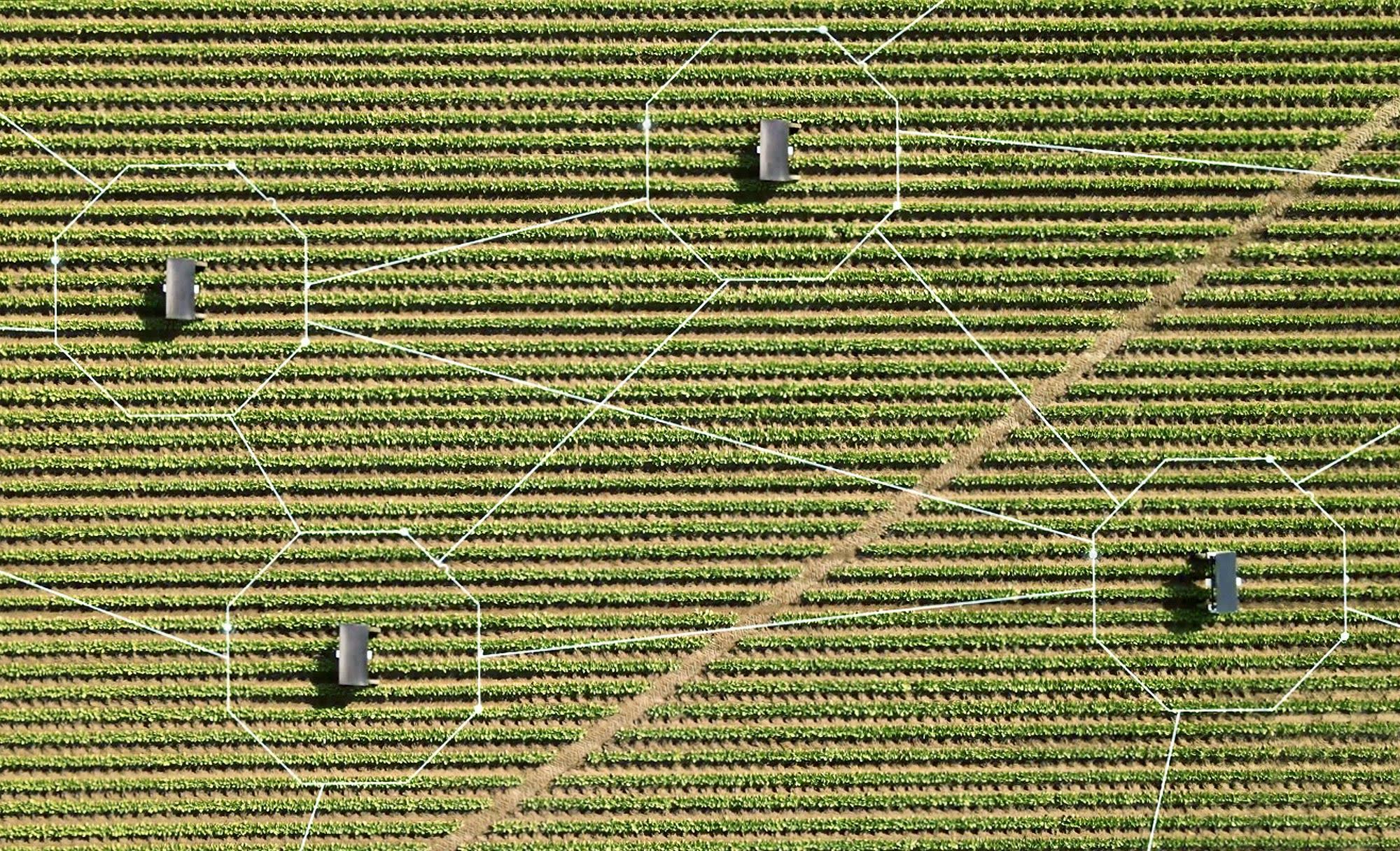
Image: Aigen. The company's Element robot working a crop row on solar power. The September 2026 announcement adds a four arm configuration to this line. This frame shows the Element robot. It is not, by itself, a labeled photograph of the four arm unit.
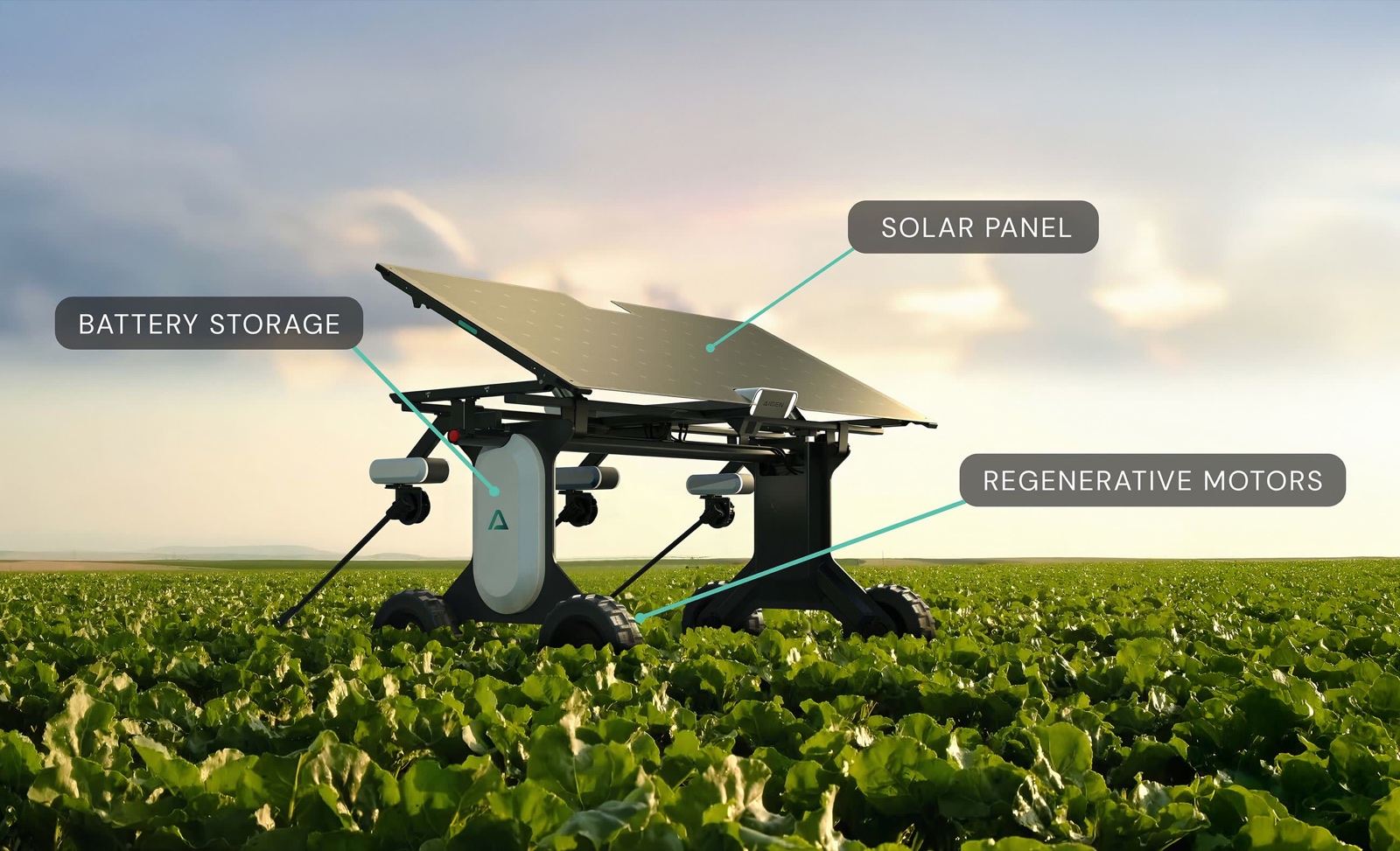
Image: Aigen. A labeled product view of Element, naming the solar panel and the weeding arms.
Sources
- Primary — Aigen, Aigen launches Element Gen 2 X4 (16 September 2026). Establishes the four arm launch, 2027 fleet availability, the Fortune 500 deployment claim, the 6 inch foliage figure, the hour counts, the warranty, and the quotes from Kenny Lee and Richard Wurden.
Related in Agri Tech
Continue reading